Argentine vs Spain Spanish: 7 Key Differences You Must Know
As a Spanish teacher, one of the most frequent questions I get from advanced students and travelers is: «Which Spanish should I learn?» While standard textbook Spanish is universally understood, the moment you interact with native speakers, the reality of different spanish dialects becomes undeniable.
The gap between Peninsular Spanish (spoken in Spain) and Argentine Spanish is arguably one of the most fascinating in the linguistic world. They share the same roots, but their rhythm, grammar, and everyday vocabulary make them sound like two completely different musical genres.
Whether you are preparing for a trip to South America or trying to understand your Argentine partner, decoding these regional shifts will completely change how you listen to the language. Let’s break down the core types of spanish language features that set these two variants apart.
Spanish Dialects Differences: Why Every Accent Tells a Story
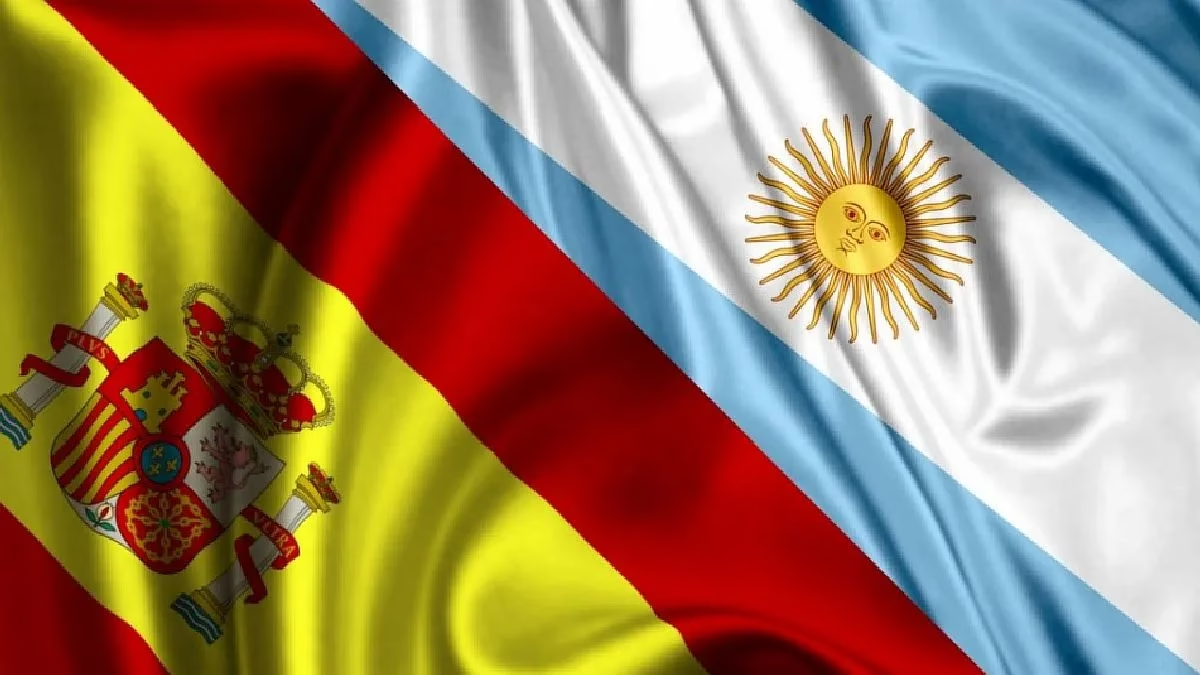
When exploring spanish dialects differences, it’s essential to understand that Spanish isn’t a rigid set of rules, but a living spectrum. When students ask how many different dialects of spanish are there, they are often surprised to learn that geography is only half the answer; history and culture shape the way we speak.
While Spain preserves the historical structures of Castilian Spanish, Argentina’s speech evolved down a deeply unique path. Thanks to massive waves of European immigration during the 19th and 20th centuries, the country developed its own unique melody, syntax, and cadence.
Recognizing that there are different dialects of spanish is the first step toward fluency. It allows you to move past textbook definitions and choose the specific melody you want to master.
The Argentine Accent: Why Does It Sound So Unique?
If there is one thing that defines the Spanish spoken in Río de la Plata, it is its unmistakable melody. When foreigners think of an argentine accent, they often comment on its Italian-like rhythm. This isn’t a coincidence; the massive waves of Italian immigrants in the late 19th century deeply influenced the intonation, cadence, and musicality of the local speech.
But a true argentina accent is shaped by more than just its rhythm. To truly understand it, you need to look at its structural and phonetic features. This brings us to rioplatense Spanish, a linguistic sub-dialect that breaks away from traditional European Spanish in two major ways: how it sounds, and how it is structured grammatically.
The Pronunciation of «LL» and «Y»
The most immediate phonetic difference you will notice lies in the argentina pronunciation spanish speakers use for the letters ll and y.
While in Spain these letters are pronounced like a soft English «y» (as in yes), in Argentina they go through a process called yeísmo rehilado. This means words like calle, playa, or lluvia are pronounced with a distinct «sh» sound (sounding like cashe, plasha, and shubia). It is the ultimate sonic signature of the region.
2. The Grammar: «Vos» vs. «Tú»
If you cross the ocean to Spain, you will hear everyone using tú for informal, everyday conversations. In Argentina, however, tú practically doesn’t exist. Instead, locals use vos.
This change isn’t just about swapping a pronoun; it completely alters the conjugation of verbs in the present tense and the imperative. For example, while someone in Madrid says «tú tienes», in Buenos Aires you will hear «vos tenés». If you want to understand how this grammatical shift works in depth, you can check out our comprehensive guide on how to use vos in Spanish, where we break down the rules step by step.
Stop studying grammar. Start speaking every week.
Join our flexible Asynchronous Conversation Club. Get weekly real-world prompts, send your audios, and receive direct personalized feedback from certified native teachers.
Vocabulary: From «Coche» to «Auto»
Beyond the rhythm and the grammar, the everyday lexicon is where the gap between Peninsular Spanish and Argentine Spanish becomes most obvious. If you study with materials focused strictly on Spain, you will learn words that locals in Buenos Aires simply never use.
This difference in vocabulary doesn’t just apply to slang or street talk; it affects completely neutral, everyday items. Navigating these lexical shifts is crucial if you want to avoid misunderstandings and sound natural in either country.
Everyday Words: Spain vs. Argentina (H3)
To give you a clear picture of how much everyday vocabulary changes when analyzing spanish dialects differences, here is a quick comparison table of essential words:
| Meaning | Spain (Castilian) | Argentina (Rioplatense) |
| Car | Coche | Auto |
| Apartment | Piso | Depto (Departamento) |
| Bus | Autobús | Colectivo (or Bondi) |
| T-Shirt | Camiseta | Remera |
| To take / grab | Coger (Warning: Highly offensive in Arg!) | Tomar / Agarrar |
| Money | Dinero | Plata |
As a teacher, I always give my students a vital piece of advice before they travel to South America: be extremely careful with the verb coger. While in Madrid it simply means «to take» a bus or «to grab» an object, in Argentina it has a strictly sexual connotation. Swapping it for tomar or agarrar will save you from some very awkward situations!
Frequently Asked Questions About Spanish Dialects (H2)
To wrap up this guide, let’s quickly answer some of the most common questions students search for when trying to understand how different dialects of spanish interact globally.
How many different dialects of spanish are there?
Linguists usually divide Spanish into roughly 8 to 10 major dialectal blocks worldwide. These include Peninsular (Spain), Rioplatense (Argentina and Uruguay), Mexican, Andean, Caribbean, and Central American Spanish, among others. Each block shares the same grammatical foundation but features completely unique phonetic and vocabulary traits.
Why does Argentine Spanish sound Italian?
It sounds Italian because of the massive wave of immigration that Argentina received between 1880 and 1950. Millions of Italian immigrants settled in Buenos Aires and mixed with the local population. While they adopted the Spanish language, they kept the speech melody, the sentence intonation (prosody), and even many hand gestures from their native Italian.
Final Thoughts: Choosing Your Spanish Path
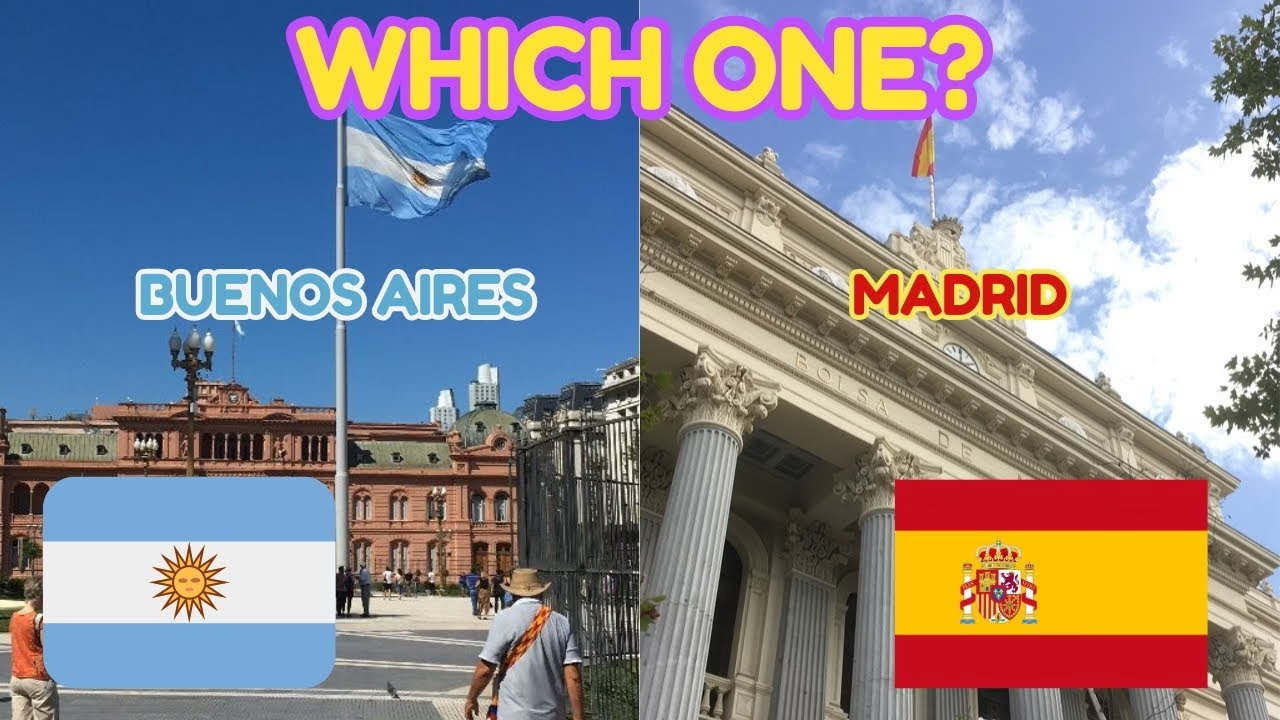
At the end of the day, deciding between Argentine Spanish and Spain Spanish comes down to your personal goals, your travel plans, and the people you want to connect with. There is no «better» or «superior» variant—both carry an incredible cultural wealth and are fully understood across the entire Spanish-speaking world.
If your heart is set on exploring South America, making friends in Buenos Aires, or unlocking the beautiful complexity of Rioplatense literature and music, mastering the local accent and grammar will completely transform your experience. Don’t let the differences intimidate you; view them as a shortcut to sounding more authentic and less like a standard textbook.
Ready to Speak Real Rioplatense Spanish?
Don’t waste months trying to learn generic Spanish in a crowded room. Let’s map out your language goals, target your specific bottlenecks, and build your confidence using the real vocabulary of Buenos Aires from day one.
📨 Want weekly Spanish tips?
Get one short email every week with useful phrases, grammar tricks, and Spanish culture insights.